
Learning Through Touch: How DeafBlind Children Understand Numbers
May 25, 2022
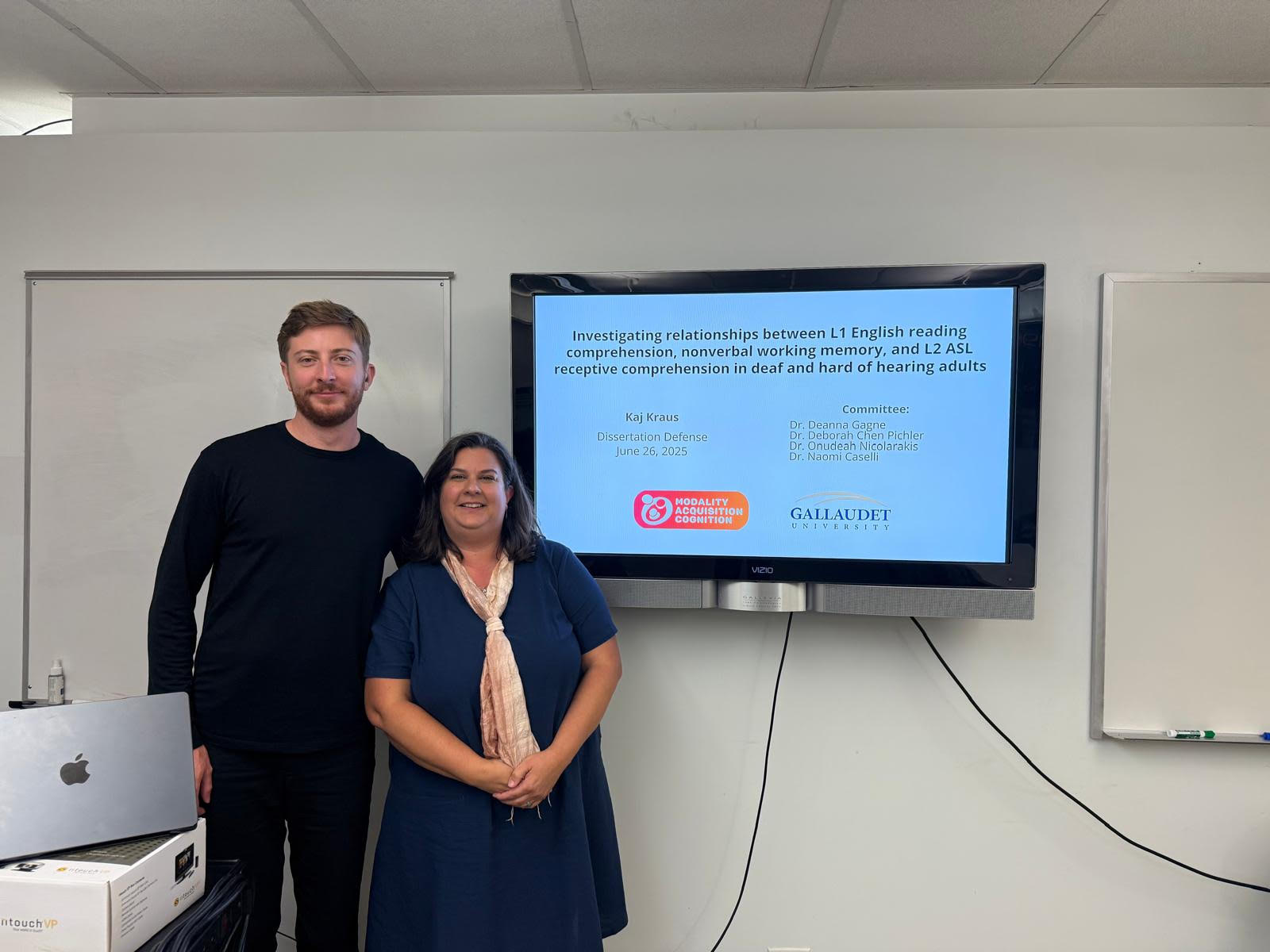
This study examined relationships among English reading comprehension, nonverbal working memory, and American Sign Language (ASL) receptive comprehension in prelingually deaf adults who acquired English as an early first language (L1) and learned ASL as a second language (L2) after childhood. We studied 74 prelingually deaf adults who acquired English early (before age 3) and learned ASL later (average ASL learning age about 18 years; range 14–30). Participants completed an English reading comprehension test (PIAT-R), a nonverbal working memory task (backwards Corsi), and an ASL receptive comprehension test (ASL-CT). Reading skills were generally quite strong, but ASL skills were highly variable. English reading comprehension was not significantly related to ASL receptive comprehension, nor was age of ASL acquisition. Nonverbal working memory was positively and significantly related to English reading comprehension and ASL receptive comprehension. Results indicate that strong English reading skills do not guarantee strong ASL receptive outcomes when ASL is learned later in life. However, nonverbal working memory appears to support language outcomes across English and ASL, suggesting that it plays an important role independent of language modality or timing of acquisition. These findings complicate prevailing models of L2 learning that directly relate L1 and L2 proficiency. Delaying early exposure to accessible language input may therefore pose risks for optimal L2 sign language outcomes in deaf populations. You can read Dr. Kraus's dissertation here.


